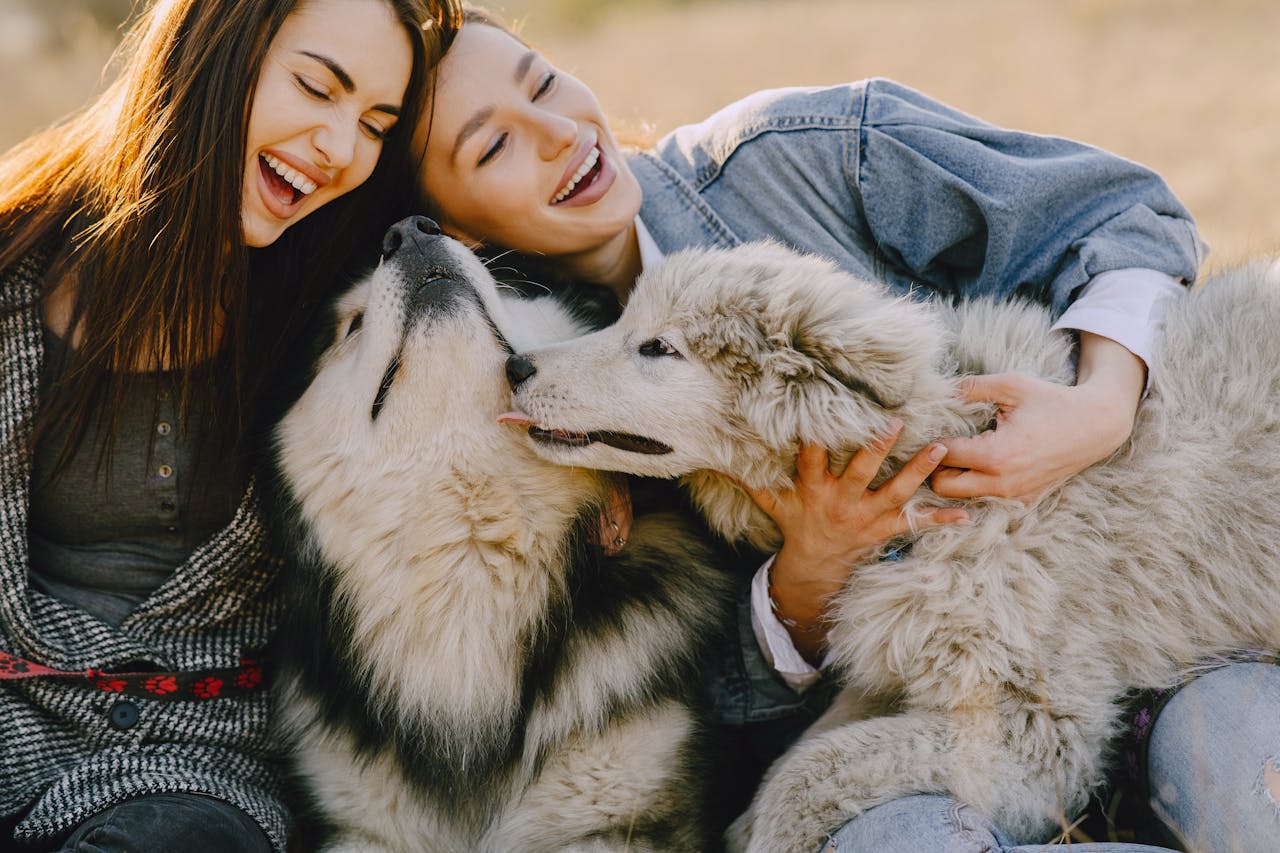
Introduction: The Question Every Dog Owner Wonders
Anyone who has ever lived with a dog has felt it—that moment when your dog runs toward you with uncontrollable excitement, tail wagging wildly, eyes shining with recognition, as if you are the most important being in their universe. It’s a powerful emotional experience, and naturally, it raises a deeply human question: Do dogs really love their owners, or are they simply reacting out of habit, training, or dependence?
For centuries, philosophers, scientists, and pet owners have debated whether animals are capable of experiencing love in the same way humans do. Some early thinkers dismissed the idea entirely, arguing that animals operate purely on instinct and survival mechanisms. According to that view, a dog’s affection was nothing more than a conditioned response—feed them, and they stay. Ignore them, and they leave.
But modern science has dramatically reshaped this perspective. With advances in neuroscience, behavioral psychology, and animal cognition studies, researchers have begun to uncover compelling evidence that dogs are not only capable of forming emotional bonds with humans but that these bonds closely resemble what we define as love.
This article explores that question in depth—not through sentiment or assumption, but through scientific evidence, behavioral observations, and evolutionary understanding. By the end, you’ll have a clearer answer to whether your dog’s affection is real—and what it truly means.
The Evolution of Dogs and Humans: A Bond Built Over Time
To understand whether dogs can love humans, we must first look at how the relationship between dogs and humans began. Dogs are believed to have descended from wolves, with domestication occurring somewhere between 15,000 and 40,000 years ago. Unlike many other domesticated animals, dogs were not simply tamed—they evolved alongside humans in a deeply interconnected way.
Early wolves that were less aggressive and more curious about humans likely began scavenging near human settlements. Over generations, these animals became more tolerant, more social, and more attuned to human behavior. Humans, in turn, benefited from their presence, using them for hunting, protection, and companionship.
This long co-evolution created a unique interspecies relationship. Dogs didn’t just adapt to living near humans—they developed the ability to understand human gestures, read facial expressions, and respond to emotional cues. This level of social intelligence is rare in the animal kingdom and suggests that dogs are wired, at a biological level, to connect with humans in a meaningful way.
The Role of Oxytocin: The Hormone of Love
One of the strongest scientific arguments supporting the idea that dogs love their owners comes from the study of oxytocin, often referred to as the “love hormone.” In humans, oxytocin is released during moments of bonding, such as between a mother and child or between romantic partners. It plays a crucial role in trust, attachment, and emotional connection.
Researchers have discovered that dogs also experience oxytocin release during interactions with their owners. In one famous study, scientists observed dogs and their owners engaging in natural interaction, such as petting and eye contact. They found that when a dog gazes into its owner’s eyes, both the dog and the human experience a significant increase in oxytocin levels.
This mutual hormonal response suggests that the bond between a dog and its owner is not just behavioral—it is deeply biological. The same chemical processes that underpin human love are also active in the human-dog relationship. This is not a coincidence; it is the result of thousands of years of shared evolution.
Brain Studies: What Happens Inside a Dog’s Mind
Advancements in brain imaging technology have allowed scientists to study the canine brain in ways that were once impossible. Using MRI scans, researchers have been able to observe how dogs’ brains respond to different stimuli, including the presence of their owners.
In these studies, dogs were trained to remain still in MRI machines while being exposed to various scents. When dogs were presented with their owner’s scent, the reward centers of their brains became highly active. This area of the brain is associated with positive emotions, pleasure, and motivation.
What makes this finding particularly significant is that the brain activity observed in dogs closely mirrors what happens in human brains when we experience love or attachment. This suggests that dogs don’t just recognize their owners—they associate them with positive emotional experiences.
In simple terms, your dog doesn’t just know who you are. Your presence makes them feel good on a neurological level.
Behavior vs Emotion: Are Dogs Just Conditioned?
Skeptics often argue that dogs do not truly love their owners but are instead conditioned to behave affectionately because of rewards like food, shelter, and attention. While it’s true that conditioning plays a role in dog behavior, this explanation alone does not fully account for the complexity of the human-dog relationship.
For example, studies have shown that dogs often choose their owners over food when given the option. In controlled experiments, dogs were placed in situations where they could either go toward a bowl of food or toward their owner. Surprisingly, many dogs chose their owner, especially when the owner was actively engaging with them.
Additionally, dogs display behaviors that go beyond simple conditioning. They show signs of distress when separated from their owners, known as separation anxiety. They also exhibit excitement upon reunion, even after short absences. These emotional responses are not easily explained by conditioning alone.
If dogs were purely motivated by food, their behavior would be far more transactional. Instead, their actions suggest a deeper emotional connection.
Emotional Intelligence in Dogs
Dogs possess a remarkable ability to understand and respond to human emotions. They can detect subtle changes in facial expressions, tone of voice, and body language. Research has shown that dogs can differentiate between happy and angry human faces and will respond accordingly.
For instance, when a person appears sad or distressed, many dogs will approach them, offer physical contact, or display calming behaviors. This suggests that dogs are not only aware of human emotions but are also motivated to respond to them.
This level of emotional intelligence is a key component of what we consider love. It indicates empathy—the ability to perceive and react to the feelings of another being. While dogs may not experience emotions in exactly the same way humans do, their capacity for emotional connection is undeniable.
Signs That Your Dog Loves You
While science provides strong evidence for emotional bonding, everyday behavior offers equally compelling proof. Dogs express their affection in ways that may differ from human expressions of love, but they are no less meaningful.
When your dog greets you with excitement, follows you from room to room, or chooses to sleep near you, these are all signs of attachment and trust. Eye contact, gentle licking, leaning against you, and bringing you toys are also forms of affectionate behavior.
These actions are not random. They are consistent, intentional, and directed specifically toward individuals the dog has bonded with. This selectivity is important—it shows that dogs do not treat all humans the same way. They form unique relationships with specific people.
Love vs Attachment: Understanding the Difference
One important distinction to make is between love and attachment. Attachment refers to a bond formed for security and survival, while love implies a deeper emotional connection that includes affection, trust, and preference.
In dogs, these two concepts are closely linked. Their attachment to humans likely began as a survival mechanism during domestication. However, over time, this attachment evolved into something more complex.
Dogs do not just seek humans for food or protection. They seek companionship, interaction, and emotional connection. They show preferences, form strong bonds, and exhibit behaviors that align closely with what we define as love.
Can Dogs Feel Complex Emotions?
While dogs clearly experience basic emotions such as happiness, fear, and attachment, the question remains whether they can feel more complex emotions like guilt, jealousy, or pride.
Research suggests that dogs are capable of experiencing a range of emotions comparable to those of a young child, typically around the age of two to three years. This includes emotions like joy, anxiety, affection, and even jealousy.
For example, studies have shown that dogs can exhibit jealous behavior when their owner gives attention to another dog or even an inanimate object. They may attempt to intervene, seek attention, or display signs of distress.
These emotional responses further support the idea that dogs are not simply reactive creatures. They have an emotional inner world that influences their behavior and relationships.
Why Dogs Are So Loyal
Loyalty is one of the most admired traits in dogs, and it is often cited as evidence of their capacity for love. But what drives this loyalty?
Part of the answer lies in evolution. Dogs evolved to live in social groups, where cooperation and bonding were essential for survival. In these groups, strong relationships increased the chances of survival and success.
When dogs became domesticated, humans effectively replaced their pack. The same instincts that once drove them to bond with other dogs now drive them to bond with humans.
This loyalty is not blind or automatic. It is built through interaction, trust, and shared experiences. A dog that is treated well, given attention, and engaged with regularly is more likely to form a strong, loyal bond.
Do Dogs Love Unconditionally?
The idea that dogs love unconditionally is a popular belief, but it deserves a closer look. While dogs are incredibly forgiving and capable of forming strong bonds, their love is not entirely without conditions.
Dogs respond to how they are treated. A dog that is neglected, abused, or ignored may not form a positive bond with its owner. On the other hand, a dog that is cared for, trained with kindness, and given attention is more likely to show affection and loyalty.
This does not diminish the depth of a dog’s love. Instead, it highlights the importance of the relationship itself. Love, even in humans, is influenced by interaction and experience.
Strengthening the Bond Between You and Your Dog
If dogs are capable of love, then it follows that this love can be nurtured and strengthened. Building a strong bond with your dog involves more than just providing food and shelter.
Spending quality time together, engaging in play, training with positive reinforcement, and maintaining consistent routines all contribute to a deeper connection. Communication is also key—talking to your dog, using consistent cues, and responding to their behavior helps build trust.
Physical affection, such as petting and grooming, also plays an important role. These interactions reinforce the bond and create positive emotional associations.
Conclusion: The Science Confirms What We Feel
After examining the evidence—from hormonal responses and brain activity to behavior and emotional intelligence—the conclusion becomes clear. Dogs do not just rely on their owners. They form genuine emotional bonds that closely resemble what humans define as love.
Their love may not be expressed in words or complex thoughts, but it is evident in their actions, their reactions, and their unwavering presence. It is a simple, honest, and deeply rooted form of connection.
So the next time your dog looks at you with those familiar eyes, wags its tail in excitement, or chooses to sit quietly beside you, understand that this is more than habit or instinct.
It is, in every meaningful sense of the word, love.