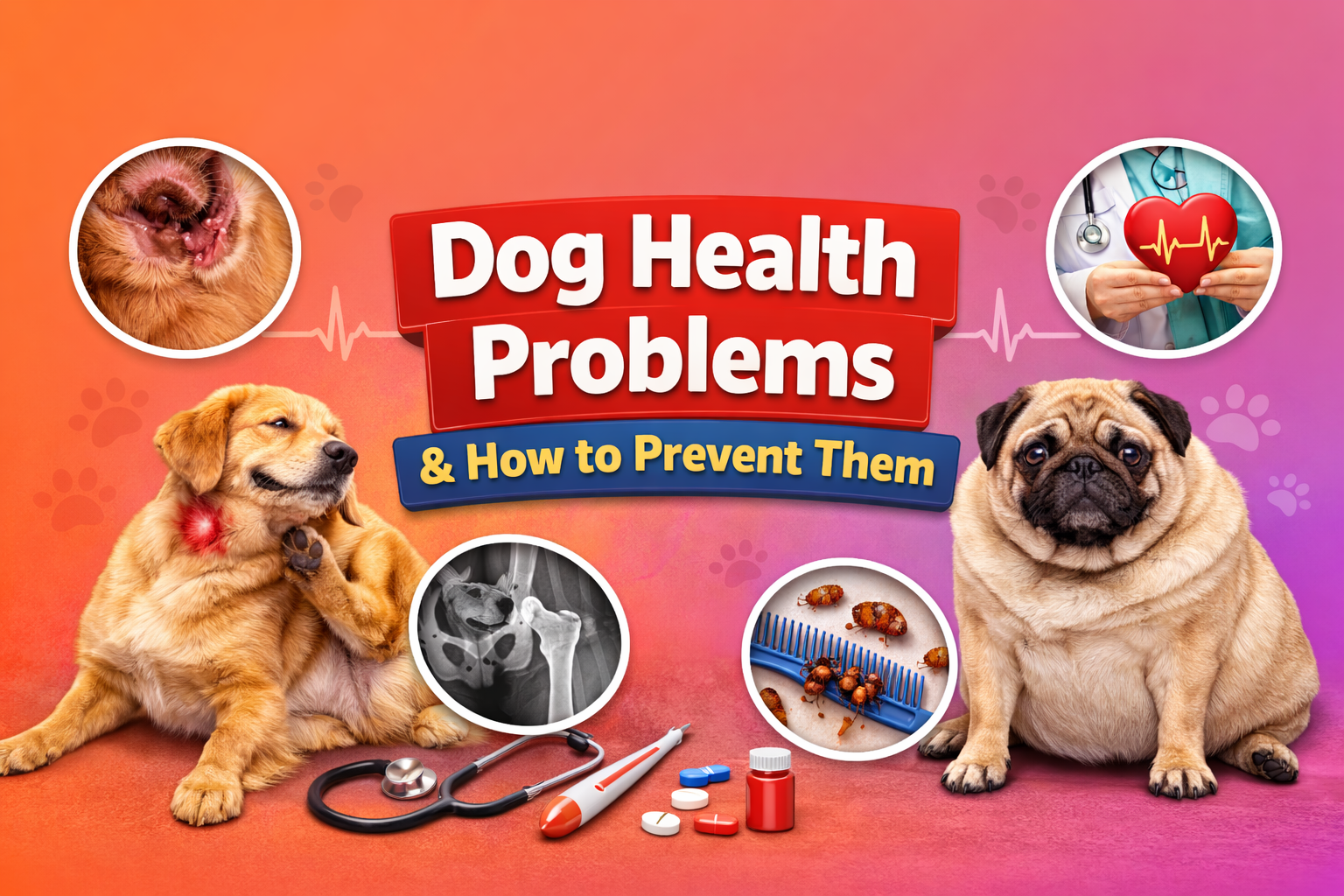
Common Dog Health Problems
Dog health problems are common and can affect dogs of all ages, sizes, and breeds. Some issues develop due to genetics, while others are caused by lifestyle, environment, diet, or lack of proper care. Many health problems start with mild symptoms but can become serious if they are ignored for too long.
Certain dog breeds are more prone to specific health conditions because of their body structure, coat type, or inherited traits. For example, large breeds often face joint problems, small breeds commonly suffer from dental issues, and flat-faced dogs are more vulnerable to breathing and heat-related disorders. Understanding breed-specific health risks helps dog owners take early precautions.
The good news is that most dog health problems are preventable or manageable with proper nutrition, regular exercise, routine veterinary checkups, and timely treatment. Early detection plays a major role in keeping dogs healthy, comfortable, and active throughout their lives. Responsible care not only improves a dog’s quality of life but also strengthens the bond between dogs and their owners.
1. Skin Allergies (Dermatitis)
Skin allergies are one of the most frequent health issues seen in dogs, causing constant discomfort and irritation. Dogs with skin allergies often scratch, lick, or bite their skin excessively, which can lead to redness, hair loss, scabs, and secondary infections. These allergies may be triggered by food ingredients, flea bites, environmental factors like pollen or dust, or even certain shampoos and cleaning products.
Some dog breeds are more prone to skin allergies due to their genetics and coat type.
are commonly suffer from allergic dermatitis. Breeds with thick coats or skin folds tend to trap moisture and allergens, making their skin more sensitive and reactive over time.
Preventing skin allergies starts with proper nutrition and hygiene. Feeding a high-quality diet with good protein sources and omega-3 fatty acids helps maintain healthy skin. Regular grooming, flea control, and avoiding harsh chemicals are equally important. Early treatment can prevent mild itching from turning into painful skin infections.
2. Ear Infections (Otitis)
Ear infections are a painful and frustrating condition for dogs, often caused by bacteria, yeast, or mites. Dogs with ear infections may shake their heads frequently, scratch their ears, or show signs of pain when their ears are touched. A strong odor or discharge from the ears is also a common warning sign that should never be ignored.
Floppy-eared breeds are especially vulnerable because their ear structure limits airflow, creating a warm and moist environment ideal for infections. Breeds such as
are at higher risk. Dogs with allergies often experience recurring ear infections as a secondary issue.
Regular ear care is the best way to prevent infections. Cleaning the ears gently once a week with a vet-recommended solution helps remove dirt and moisture. Drying the ears after baths or swimming is crucial, and any redness or smell should be checked early to avoid chronic problems.
3. Hip Dysplasia
Hip dysplasia is a genetic joint disorder that affects a dog’s ability to move comfortably. It occurs when the hip joint does not fit properly into the socket, leading to friction, pain, and eventually arthritis. Dogs with hip dysplasia may show difficulty standing up, limping, reduced activity, or stiffness after exercise.
Large and giant breeds are more commonly affected due to their size and rapid growth rate.
- German Shepherds
- Labrador Retrievers
- Golden Retrievers
- Rottweilers
- Saint Bernards
are among the breeds most at risk. Poor breeding practices and excessive weight can significantly worsen this condition.
Prevention focuses on responsible breeding, controlled growth, and joint care. Puppies should not be over-exercised, and maintaining a healthy weight throughout life is critical. Joint supplements, balanced nutrition, and regular vet checkups can slow progression and improve quality of life.
4. Obesity
Obesity is often overlooked but is one of the most dangerous health problems in dogs. An overweight dog is at higher risk of heart disease, diabetes, joint disorders, and a shorter lifespan. Many owners mistake extra weight for cuteness, not realizing the long-term damage it causes.
Breeds like
are especially prone to obesity due to their strong appetite and slower metabolism. Lack of exercise, overfeeding, and frequent treats contribute heavily to weight gain, especially in indoor dogs.
Preventing obesity requires discipline and consistency. Feeding measured portions, avoiding human food, and ensuring daily exercise are essential. Regular weight monitoring helps detect early changes, making it easier to keep your dog fit and healthy.
5. Dental Disease
Dental disease is extremely common in dogs but often ignored until it becomes severe. Plaque buildup can lead to bad breath, inflamed gums, loose teeth, and infections that may spread to vital organs like the heart and kidneys. Poor oral health significantly reduces a dog’s overall well-being.
Small dog breeds such as
are particularly vulnerable due to crowded teeth and smaller jaws. These breeds accumulate plaque faster and often require more frequent dental care than larger dogs.
Preventive dental care should begin early in life. Brushing your dog’s teeth several times a week, providing dental chews, and scheduling professional cleanings can prevent serious complications. Healthy teeth mean better digestion and a longer, happier life.
6. Heart Disease
Heart disease in dogs can develop slowly and remain unnoticed until it becomes severe. Symptoms such as coughing, fatigue, difficulty breathing, and fainting may appear gradually. Early detection is critical because heart conditions can be managed effectively if caught in time.
Certain breeds are genetically predisposed to heart problems.
commonly develop valve disease or cardiomyopathy. Age, obesity, and lack of exercise also increase the risk.
Regular veterinary checkups play a key role in prevention. Maintaining a healthy weight, providing moderate exercise, and feeding a balanced diet can support heart health. For at-risk breeds, routine heart screenings are highly recommended.
7. Digestive Problems
Digestive issues such as vomiting, diarrhea, bloating, and gas are common in dogs and can range from mild to life-threatening. These problems may be caused by food intolerance, infections, stress, or sudden dietary changes. Chronic digestive problems can lead to nutrient deficiencies and weight loss.
Breeds like
are known for having sensitive digestive systems. Their gut structure and metabolism make them more vulnerable to stomach disorders and food sensitivities.
Prevention includes feeding a consistent, high-quality diet and avoiding abrupt food changes. Introducing new foods gradually, maintaining regular feeding times, and adding probiotics can help keep the digestive system healthy and stable.
8. Eye Problems
Eye problems in dogs can significantly affect their comfort and vision. Conditions like dry eye, cherry eye, corneal ulcers, and infections often cause redness, discharge, excessive tearing, or squinting. Ignoring eye issues can lead to permanent vision damage.
Flat-faced breeds such as
are especially prone due to their protruding eyes. Their eye structure makes them more vulnerable to injury, dust exposure, and dryness.
Preventing eye problems involves daily eye cleaning, keeping hair trimmed around the eyes, and protecting dogs from dusty environments. Any signs of discomfort should be addressed quickly to prevent complications.
9. Parasites (Ticks, Fleas & Worms)
Parasites are a serious threat to a dog’s health and can affect dogs of all breeds. Ticks and fleas cause itching, skin infections, and anemia, while internal worms can damage organs and weaken the immune system. Parasites can also transmit dangerous diseases.
Dogs that spend time outdoors or in contact with other animals face a higher risk. Puppies, senior dogs, and dogs with weak immunity are particularly vulnerable to heavy infestations.
Preventive care is essential and should never be skipped. Monthly deworming, regular tick and flea treatments, and maintaining a clean environment are the best defenses against parasites. Prevention is far easier and safer than treatment.
10. Diabetes
Diabetes in dogs is a serious metabolic disorder that affects how the body processes sugar. Dogs with diabetes often show increased thirst, frequent urination, weight loss, and lethargy. Without proper management, diabetes can lead to severe complications.
Breeds such as
- Poodles
- Dachshunds
- Beagles
- Samoyeds
are more likely to develop diabetes. Obesity and poor diet greatly increase the risk, especially in middle-aged and senior dogs.
Preventing diabetes focuses on maintaining a healthy weight and balanced diet. Regular exercise and routine health screenings help detect early warning signs. With proper care, diabetic dogs can live long and comfortable lives.
11. Kidney Disease
Kidney disease develops gradually and often goes unnoticed until it becomes advanced. Symptoms include increased thirst, frequent urination, loss of appetite, and weight loss. Chronic kidney disease is more common in older dogs but can affect younger ones too.
Breeds like
- Shih Tzus
- Lhasa Apsos
- Cocker Spaniels
show a higher genetic risk. Poor hydration, infections, and long-term medication use can worsen kidney health.
Prevention includes ensuring constant access to fresh water and regular blood tests, especially for senior dogs. Early diagnosis allows dietary management and medication to slow disease progression significantly.
12. Liver Disease
Liver disease affects the body’s ability to detoxify and process nutrients. Symptoms may include vomiting, jaundice, loss of appetite, and behavioral changes. Since the liver plays a vital role, any damage can have widespread effects.
are more prone to liver conditions due to genetic factors. Exposure to toxins, poor diet, and infections can also damage liver function.
Preventive care involves avoiding toxic substances, feeding balanced nutrition, and conducting routine blood tests. Early intervention greatly improves treatment success and long-term outcomes.
13. Epilepsy (Seizure Disorders)
Epilepsy is a neurological condition that causes recurring seizures in dogs. Seizures can be frightening to witness and may vary in intensity and duration. While epilepsy cannot always be cured, it can often be managed effectively.
Breeds such as
are genetically predisposed. Seizures often begin at a young age and may continue throughout life.
Management includes lifelong medication and regular monitoring. Avoiding stress and maintaining a stable routine can reduce seizure frequency. With proper care, epileptic dogs can still enjoy a good quality of life.
14. Cancer
Cancer is one of the leading causes of death in older dogs. It may appear as lumps, unexplained weight loss, bleeding, or behavioral changes. Early detection plays a crucial role in treatment success.
are among the breeds with higher cancer risk. Genetics, age, and environmental factors all contribute to cancer development.
Regular health checks, early lump evaluation, and a healthy lifestyle can improve outcomes. Many cancers are treatable if diagnosed early, allowing dogs to live longer, happier lives.
15. Heat Stroke (Critical for India 🇮🇳)
Heat stroke is a life-threatening condition caused by overheating, especially in hot and humid climates. Symptoms include excessive panting, drooling, weakness, vomiting, and collapse. Immediate treatment is essential.
Breeds like
are extremely vulnerable due to thick coats or short noses. Indian summers significantly increase the risk for these dogs.
Preventing heat stroke involves avoiding midday walks, providing shade and water, and never leaving dogs in parked vehicles. Cooling mats and proper ventilation can save lives during extreme heat.